STORIES / DONEXT!!
If Robots Did the Work, How Would You Spend Your Life?
A glimpse of the next future world: sharing in robots' work and deciding how to use the time it frees up, from maintaining machines to rethinking the factory floor.
Coming Next / FICTION — A fictional preview.
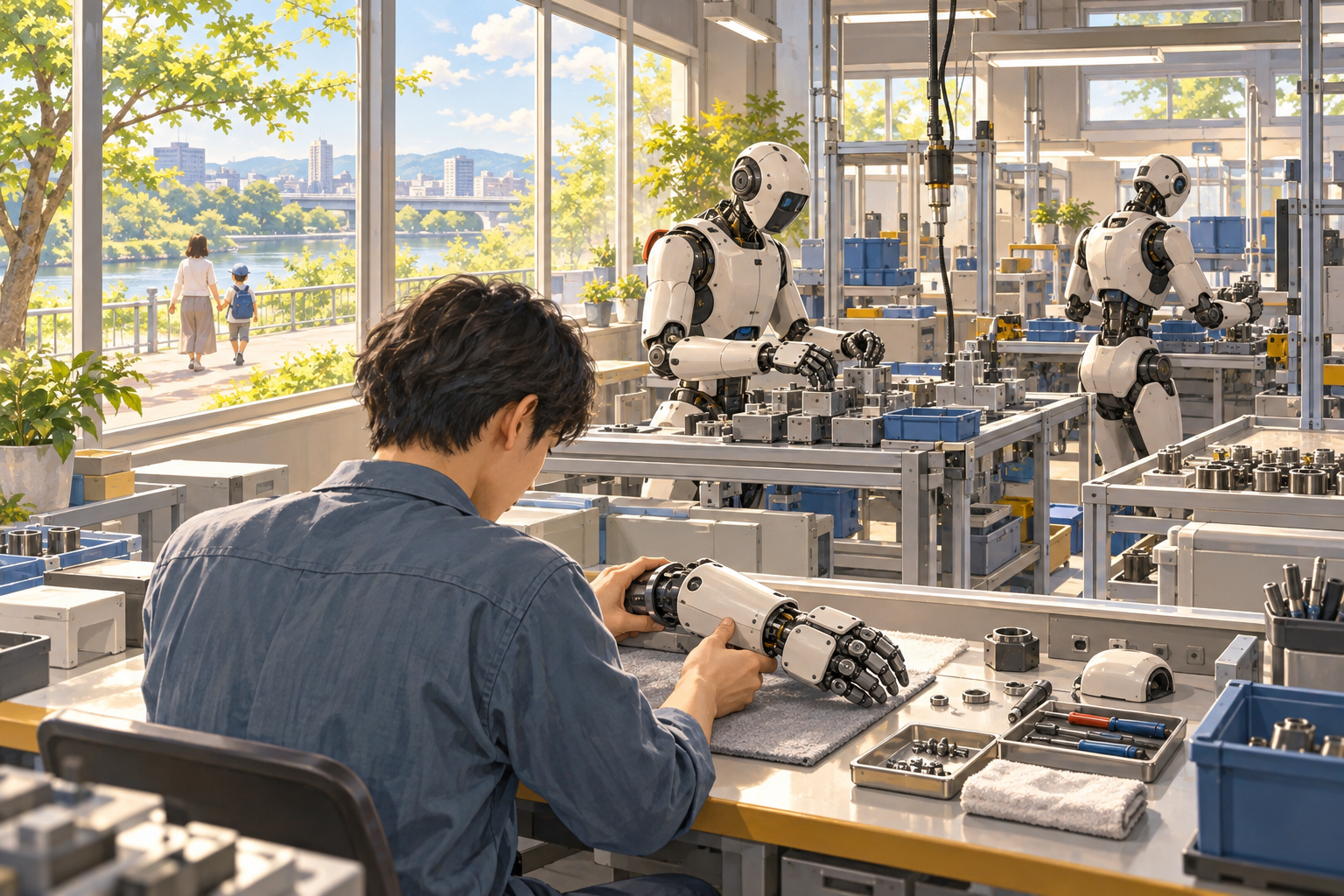
AI-generated illustration of a fictional future.
Hello, I'm Wayfinder.
In GLOBAL OFFICE, we met people whose jobs allowed them to live almost anywhere in the world. Next, I'd like to visit a world where AI-powered robots have become a familiar presence in factories and other workplaces.
Business leaders and researchers have already talked about a future in which robots work and people have more freedom in how they live.
Imagine people pooling their money to own robots, then sharing the income those machines earn. They might work a little less themselves, spend more time with family, or finally try something they've always wanted to do.
If that way of life became ordinary, how would you use your extra time?
But a robot working in a factory needs looking after, too. Parts wear out with use, and newer machines keep arriving. Should you keep a robot that's still working, replace its parts, or buy a newer model? Even people who rely on robots to do the work would have decisions to make.
For the factory manager responsible for those machines, there are other concerns. A deadline has to be met. But pushing a robot too hard could damage it—and the owner might be reluctant to entrust it to the factory again. In this world, improving workflows and facilities also helps a factory attract the robots it needs.
Alongside that manager are engineers working on shared standards for replacing parts so older robots can gain new capabilities. If replacing the entire machine isn't the only option, more work might be able to continue.
How would people spend the time freed up by robots? And to keep those machines working, what would people choose to do—and what responsibilities would they take on?
Let's explore those lives together in our next future world.
This article is a preview of a fictional future world we are preparing to depict.