06:00
Morning in the Fields.
Check the vegetables and irrigation channels before the sunlight gets too strong.
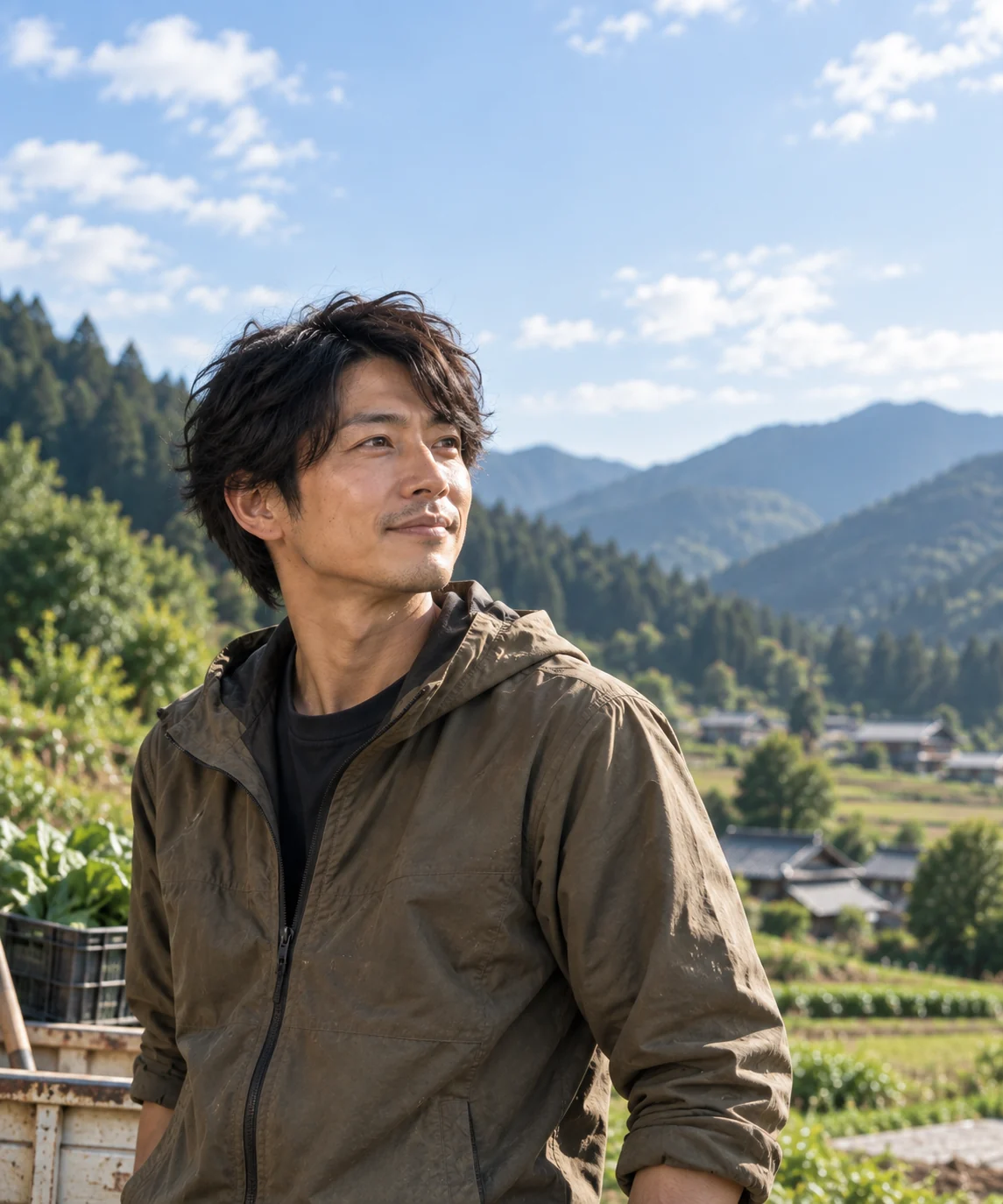
2035 / GLOBAL OFFICE / INTERVIEW 01
VIRTUAL INTERVIEW / FICTIONThis person is fictional. The future is a possibility. Its foundations lie in real changes happening today.
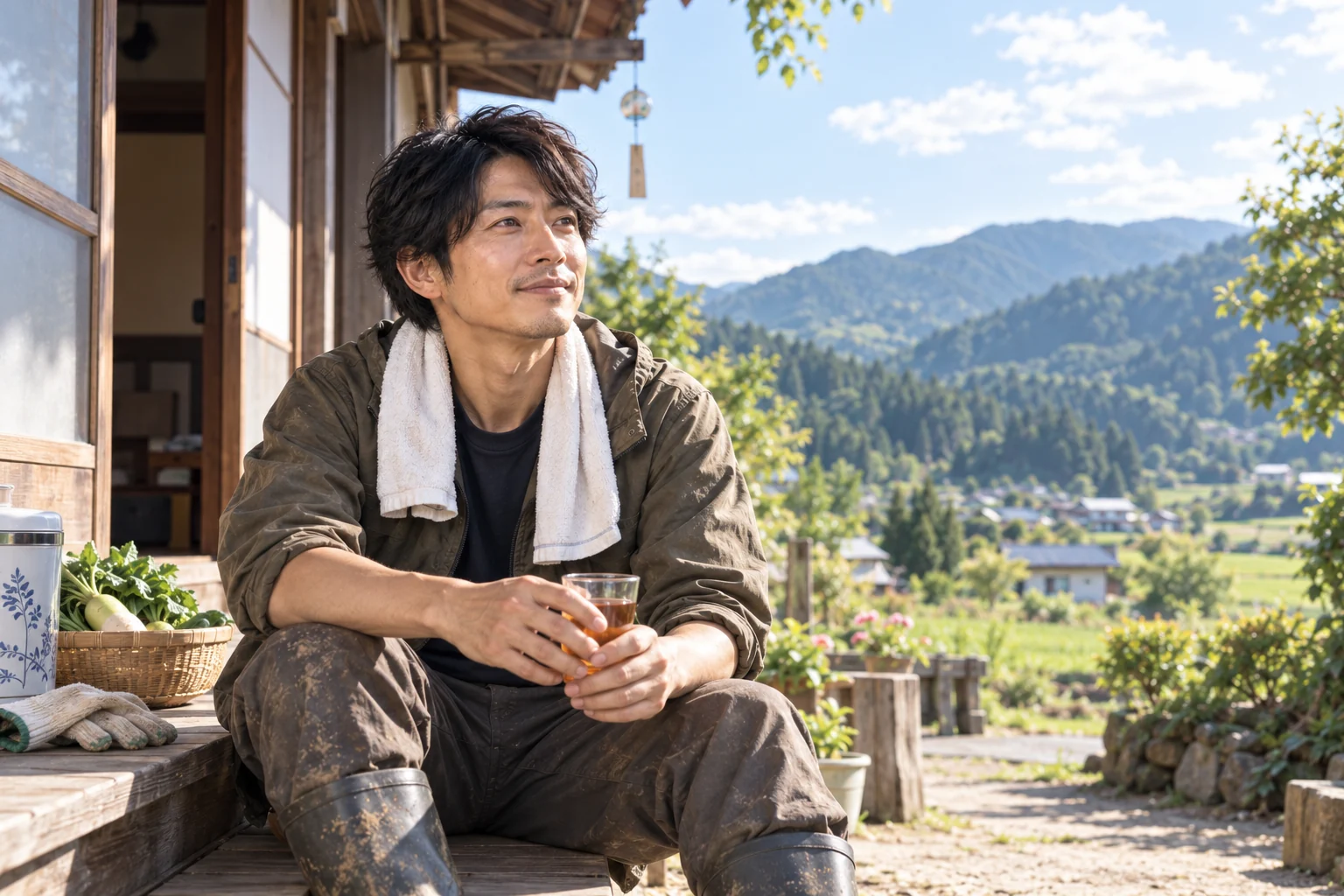
SCENE / 09:12
The breeze is still cool. Shota Tanaka has just finished his morning work in the fields. On the table are a glass of cold barley tea and the lightweight headset he uses for his evening job. When he was an office worker in Tokyo, he never imagined a future in which those two things would sit side by side on the same table. Now that he has moved to Shiiba Village in Miyazaki Prefecture, he combines farming with IT work for an international team. We visit his life in 2035, when AI translation and virtual offices have become part of everyday remote work.
PROFILE
— Why did you choose this place?
When I lived in Tokyo, my job determined where I lived. Could I get to the office easily? Was it convenient to meet clients? I thought that was just how things worked.
But then almost everything my company did became asynchronous, and AI translation became a normal part of meetings. I began thinking, "Why not live where I want and go to work in the wider world only when I need to?"
"It doesn't feel so much like I changed jobs.
It's more like I changed where I put my work."
— Which is your main job, farming or IT?
People still ask me that all the time! (laughs) But as far as I'm concerned, they're both my main jobs. I don't turn into a different person between day and night.
Working in the fields gives you a completely different sense of time from looking at product metrics. In one job, you make an improvement and see the result tomorrow. In the other, you might wait six months for an answer. Having both suits me.
A DAY IN 2035
06:00
Before starting work, check the soil.
Check the vegetables and irrigation channels before the sunlight gets too strong.
Deliver produce, go shopping, talk with neighbors. AI gathers online notifications for later.
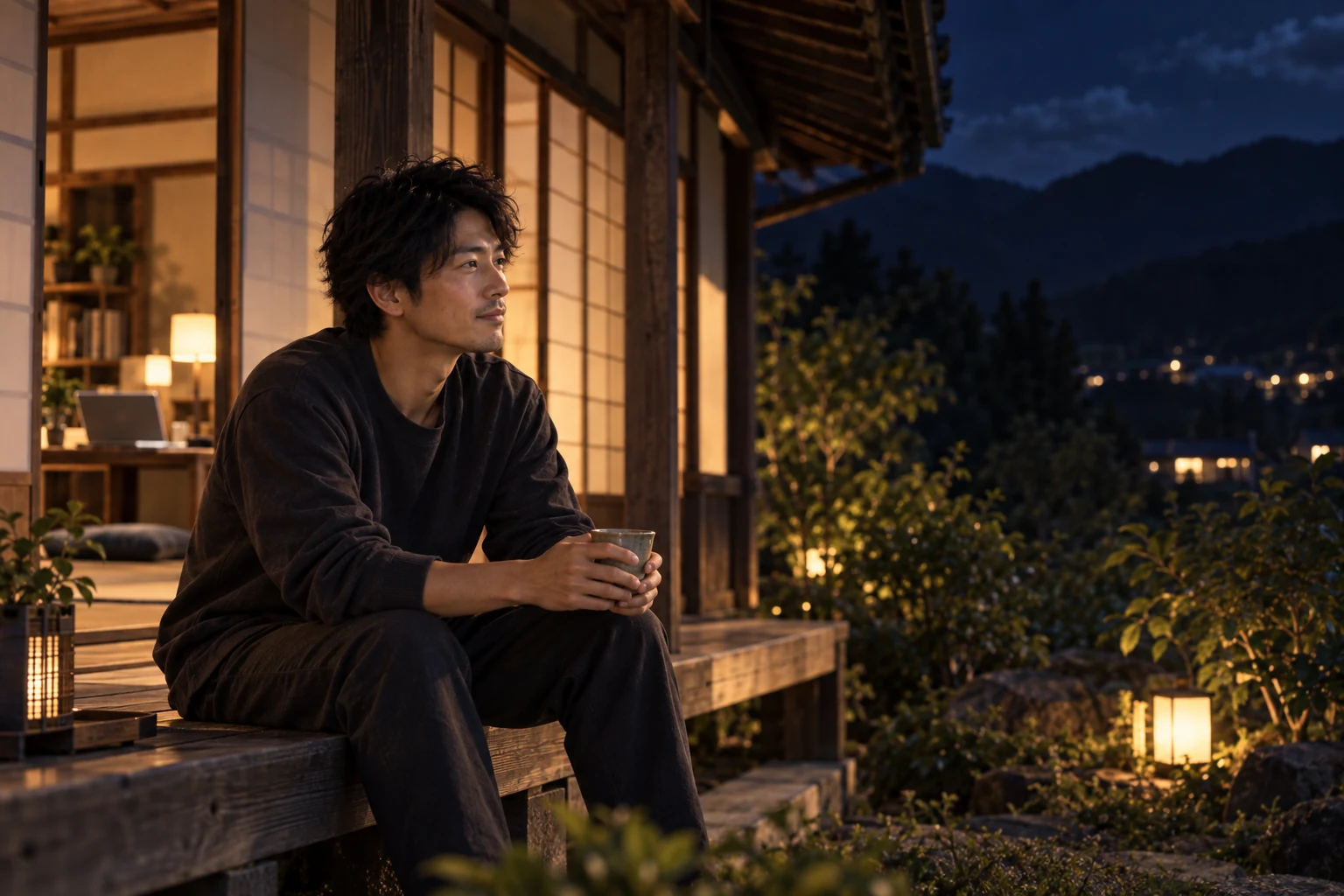
As Asia winds down, teams in Europe and the United States start their day.
Real-time AI interpretation keeps the conversation moving. He barely needs to think about notes or minutes.
Market research, prototypes, preparations for user testing. By the time the meeting ends, the next phase of work is already underway.
— Do you ever feel left behind professionally, living so far into the mountains?
Quite the opposite. I used to think being on the front line meant going to the physical workplace. Now it's less about where you are and more about what decisions you make there and how quickly you can put them into action.
Of course, some things are better handled face to face. When that happens, I go. I just don't think I have to be there every day anymore.
"I thought I was retreating from the world,
yet my work feels more connected to it than before."
— Is there anything about this life you're unhappy with?
Of course. The hospital is far away, winter can be difficult, and farming is more physically demanding than I expected. And when I work at night to match the overseas team's hours, my schedule sometimes falls out of sync with my family's.
So it's not a story about how moving to the countryside makes you happy. But being able to decide for myself which inconveniences I'm willing to live with? That's a big difference.
HOW I GOT HERE
Commuted to the office and worked remotely. He enjoyed the job but felt uneasy about spending the rest of his life in the city.
AI translation and AI agents became part of everyday work, greatly reducing restrictions on where he could live.
He struggled to fit into his first community and left after six months. Remote work didn't make every place the same.
Through an acquaintance, he rented a small plot of farmland and started farming alongside his IT job.
He stopped introducing himself as either an office worker or a farmer.
WHAT'S NEXT
"It's not that I want to work less.
I want to have more time for things besides work."
His next idea is to set up a small lab where high-school students in the village can try work connected to overseas companies. Laughing, he admits he hasn't discussed it with his employer yet.
FICTION ENDS HERE
REALITY LINK / 2026
EDITORIAL PREVIEW / SOURCES IN PREPARATION
SATELLITE
Working online from mountain regions or while traveling is a more realistic option than it used to be.
TRANSLATION
AI translation is entering meetings and everyday communication, changing who can take part in international teams.
AGENTS
As AI agents begin to handle research, production, and testing, people's work is shifting toward judgment and editing.
NEXT INTERVIEWS IN THIS FUTURE
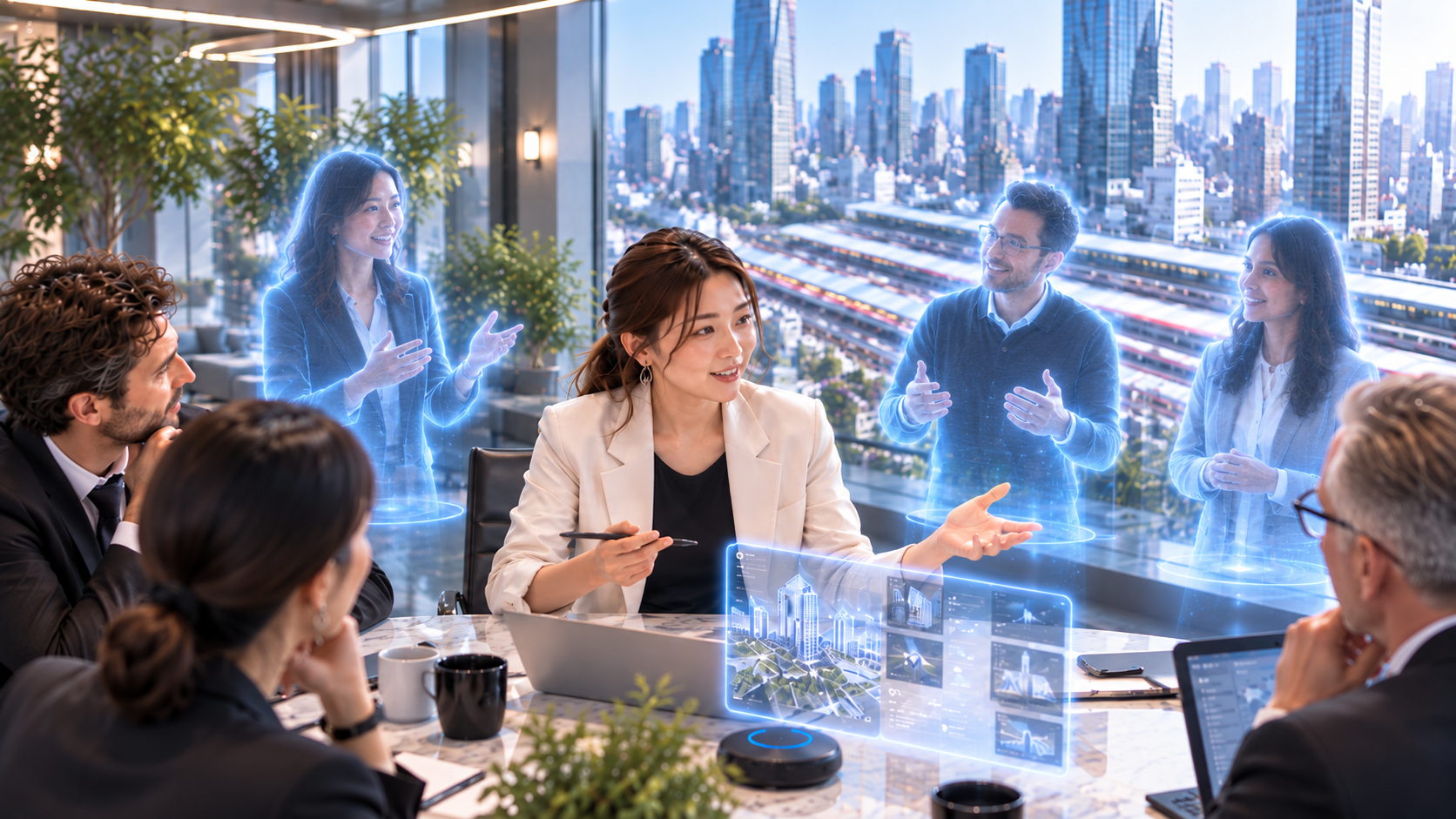 TOKYO / 09—18
 MATSUMOTO / WORK & FAMILY
 FUKUOKA / SAME TOWN