STORIES / DONEXT!!
Black Bean Coffee, Japanese Sweets, and a Taste of Tokyo
A quiet café break with Maho in Tokyo, 2035.
Weekend Story / FICTION — A fictional story.
A story from a possible future. The people, cafés and events depicted in 2035 are fictional.
Tokyo, 2035. Open a café menu and, beside the house blend and café latte, you'll find something else: "Black Soybean Coffee and Today's Japanese Sweet."
Hello, I'm Wayfinder. Today we're visiting two of Maho Saeki's favorite places. You met her in Interview 02, where she helps create the spectator experience for robot basketball. On her days off, though, she's the one relaxing at a café.
Dorayaki Day Calls for Black Soybean Coffee
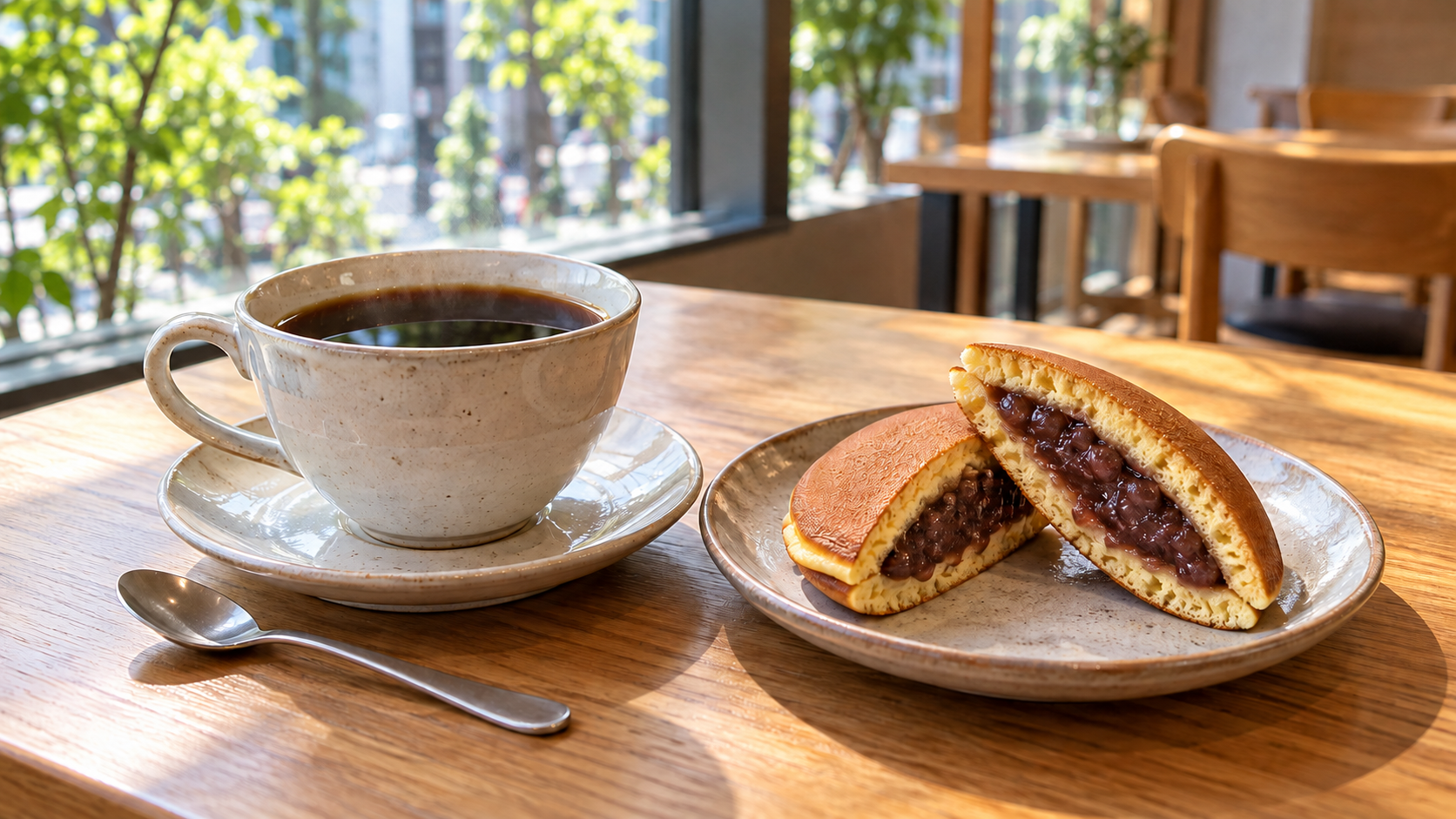
At a café Maho visits with her friends, the black-soybean coffee and Japanese sweets set is a favorite.
The café makes its black-soybean coffee by roasting and grinding black soybeans, without mixing in any coffee beans. In the cup, it looks a little like ordinary coffee, but the aroma and flavor are quite different.
"The first time, I was expecting it to taste like coffee. But then I tried it with dorayaki, and I thought, actually, I like this better."
What Maho enjoys is the way the nutty, roasted flavor of the beans meets the sweetness of anko, the red-bean filling inside the dorayaki pancake. When she and a friend are picking out Japanese sweets, it's only natural to choose this drink, too. If the menu includes warabi mochi dusted with kinako, roasted soybean flour, she finds it a little harder to decide.
In this imagined Tokyo of 2035, some people first discover black-soybean coffee as a substitute for coffee, but end up choosing it for how well it pairs with sweets. A familiar ingredient has added one more staple to the café menu.
Once a Month, a Cup Grown Right Here in Tokyo
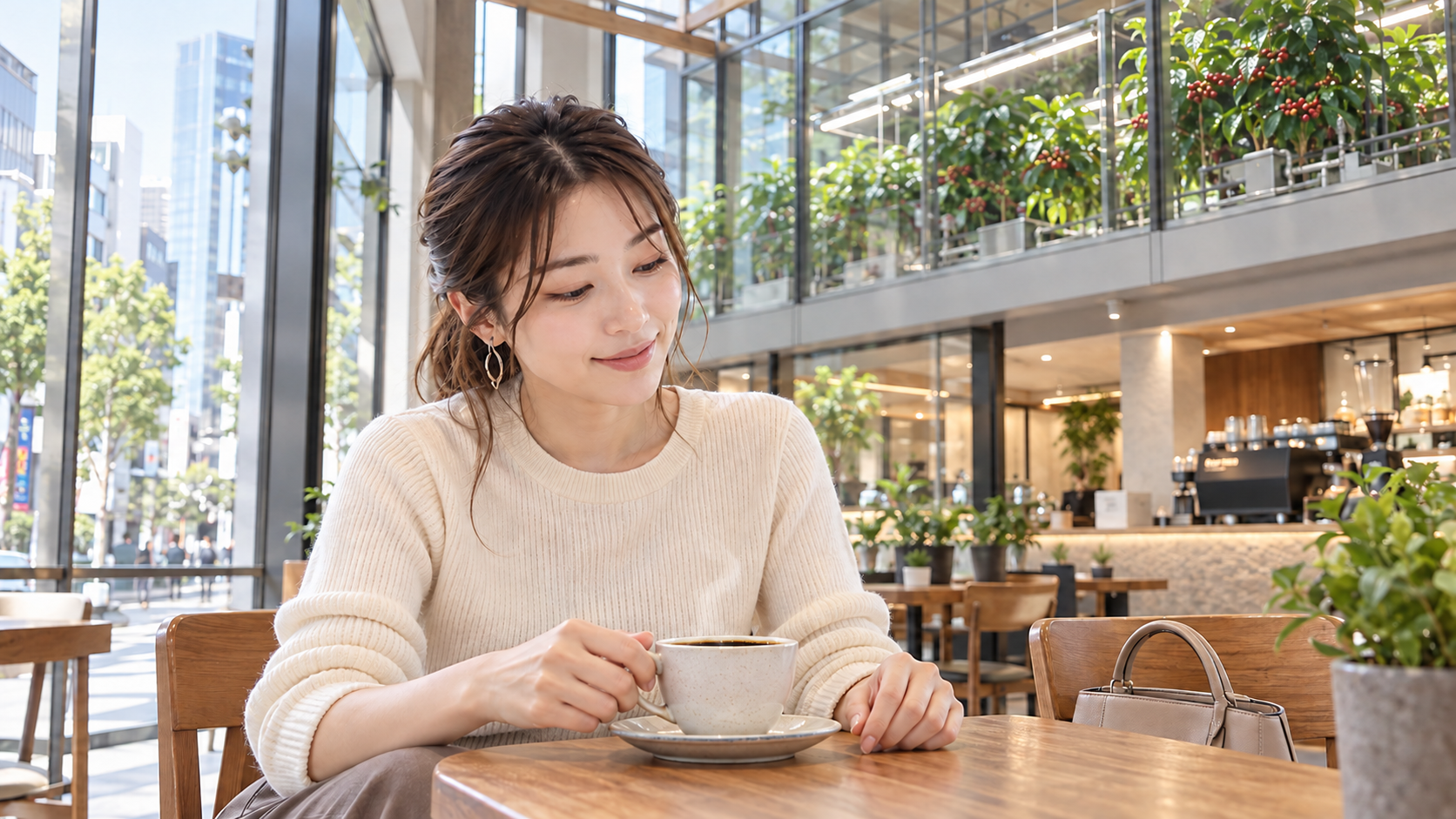
Her other favorite spot is on the ground floor of an urban farming building.
Coffee trees grow on the floors above. The cultivation rooms supplement daylight with artificial lighting and carefully control temperature and water. Cafés like this are still unusual in Tokyo, and Maho remembers looking up at the building in surprise on her first visit.
The origin listed on the menu is simply "Tokyo." Fruit harvested upstairs is processed for its beans, dried and roasted, and eventually served in a cup downstairs.
Being grown nearby doesn't make it cheap. The harvest is still small, while both the space and the growing environment cost money to maintain. Even for Maho, this is a little more expensive than her usual coffee.
"It has a little acidity, then a sweetness that stays with you. I like drinking it here. I couldn't come every day, but about once a month? That works."
Of course, coffee from Tokyo doesn't all taste the same. What she loves is this particular cup, at this particular café. After a day spent browsing clothes or visiting an exhibition, she looks forward to a moment by the window.
When she brings a friend, she points to the cup and says, "Apparently, they grew this just upstairs." She likes the thought that there's now one more thing Tokyo can produce.
Back to That Window Seat Next Month
As coffee-growing conditions change, people are both finding ways to protect established growing regions and trying cultivation in new places. The cafés of this imagined 2035 offer the familiar cup of coffee, a drink made from black soybeans, and the still-slightly-special taste of coffee grown in Tokyo.
Next time Maho goes out for Japanese sweets with a friend, she'll probably choose black-soybean coffee. For her monthly detour, she'll head to the café in the farming building.
On the way out, she's already checking the schedule of next month's exhibition. It might be the perfect excuse to stop by that café again.